
It's Not About Money.


Someone asked me why I wrote this Substack which has all of four paid subscribers.
Gasp!
That’s not a metric you’re supposed to admit, and don’t worry, my other Substacks are doing much better and I can still feed the puppies.
But to this person that doesn’t matter. What matters is that I take time writing something that doesn’t make me money or increase my SEO or whatever.
“It’s a waste of your time,” he said.
Meh.
I explained that I don’t believe that the worthiness of our work is necessarily related to how much money you make or how big an audience you have.
He was not into this explanation.
Gasp again! :)
It’s about intrinsic value, maybe?
Apologies while I’m trying to filter though my thoughts here.
LifeDev writes, “Intrinsic vs Extrinsic Value: The Dance of Inherent Worth and Utility Our journey commences with an exploration of the core dichotomy in the perception of value – the intrinsic versus the extrinsic. When we talk of intrinsic value, we imply that an entity holds worth inherently, independent of its usefulness or desirability to others. This concept transforms the ordinary into the extraordinary, the transient into the timeless. Picture a magnificent sunset painting the sky with a riot of colors or the rich complexity of a piece of music that moves the soul. Their value isn’t derived from their potential to be used or owned; instead, they resonate with a worth that is inherent, non-utilitarian, and transcendent. The same applies to human life and dignity, which carries intrinsic value that goes beyond the scope of measurable attributes or external validations. This belief forms the bedrock of human rights and equality – the idea that every human, irrespective of their social status, race, or capabilities, carries an intrinsic and inalienable value.”
That’s a lot of words, isn’t it?
For me, part of what I think about is this: when we let our worth—or our art or book or column—be based on things outside ourselves there’s no stability there, right?
Who we are and the value of who we are stops being up to us and up to the world.
That’s not cool for our hearts.
But it also might make us (and all the people like us) start only doing things that get clicks, get money, get followers instead of following our own hearts and our own selves instead.
And then we end up doing things that don’t actually make our own heart sing. Like me no longer writing my crappy poems.
I’ve been thinking about this a lot as I try to juggle who I am and what I love with how to survive in a world that requires money to survive. Or we start to only do things that are easy or laudable as we try to keep from failing.
THE POEM
Robert Chute was a much loved science professor at Bate College. I spoke of him this weekend while having breakfast with a friend, who is a writer and teacher, who is visiting from Bridgton. That’s where he was born. This is via Bates College.
Heat Wave in Concord
By Robert Chute
“Dancing and laughing along the beach
came the twenty-ninth bather…”1
I
Farmers working the fields quit early,
as much for ox or horse as for men –
one old man had already died; exhausted
by heat, wrung out, wrinkled
like dried fruit.
Their women, buttoned, laced, strapped
under petticoats, skirts, sleeves,
sit and work, work and sit
in the dim, dead heat
of parlor, kitchen, and shed.
But one, an exceptional one, in
a windowless storage room, stands,
naked and white in a wash tub’s cold ring.
Her cast off clothes spilled
like dried discarded flowers.
The tinned dipper lifts water, still cool
from the well, again and again. The water
passing over her body like
unseen fingers and back
to the tub again.
Perhaps one of them also dreams of the river,
of young men who float there,
pale bellies tempting the sun.
II
From houses on opposite sides
of the elm-roofed main street Henry
and Ellery, leaving dishes and scraps
of cold dinner behind,
meet, retreat to the river.
A man stands in a barn door, his shirt
stained with sweat, hat hanging slack
in his hand. A woman in the shed’s
dark cave churns the morning’s milk
the heat would soon sour.
They shake their heads. What beside envy
do they feel as these renegades slip away?
Do they imagine how it feels to peel
close, sweaty clothes away,
let the waters have their play?
At the river Henry explains that banks have
a gender, this one, for example, being
convex, alluvial, gradual, and
feminine; the opposite, concave,
undercut, and masculine.
Ellery makes some comments that
Henry’s Journal will never repeat.
They strip and wade in.
III
Soon, by the opposite, masculine, shore, up
to their chins, they face the current.
The heat of the day is carried
down, away. They wade upstream,
wearing their hats against the sun.
They hold their bundled clothing high.
From deep holes to shallows
the water falls, rises again.
Chest, ankle, knee, belly,
chest, and down again.
Rounding a bend they see the plank bridge.
Boys, their work done, race and strip
and plunge. Boys breaching
and splashing; marble boys riding
imaginary dolphins.
On the bank one boy sits, lifting a foot
to examine some bruise, fixed
in an instant as an engraving in
an antiquities book; but subtly
colored, sunburned, bare.
The two men put on shirts now, feeling the sting
of the sun. Bridge rails bleed pitch,
the planks shrink.
IV
The drying tails of their shirts stick
to their buttocks and thighs. Perhaps
because of the shirts they feel undressed,
retreat to the water. The water, like
unseen fingers, passes over them.
They wade on into a shaded, shallower reach
of late afternoon, hear the clang
of a distant bell. Some farmer’s wife
signaling an early supper. They climb out
on the feminine side.
They wait for the air to dry them. How long
this single mile of fluvial walk
has seemed, passing from present
to pastoral to classical,
back to the present again.
They dress, turn toward the world of women
where mother, sister, or wife waits. The day
slides toward evening and the moon.
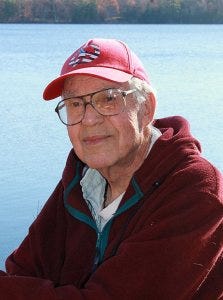
Professor Emeritus of Biology Robert M. Chute is an award-winning Maine poet.
N.B.: Thoreau records his “fluvial walks” in the Journal for 1852. He read Whitman’s ‘Leaves of Grass,’ including, we assume, the song of the 29th bather in 1856.
Thoreau’s comment: “As for the sensuality in Whitman’s ‘Leaves of Grass,’ I do not so much wish it was not written, as that men and women were so pure that they could read it without harm.”
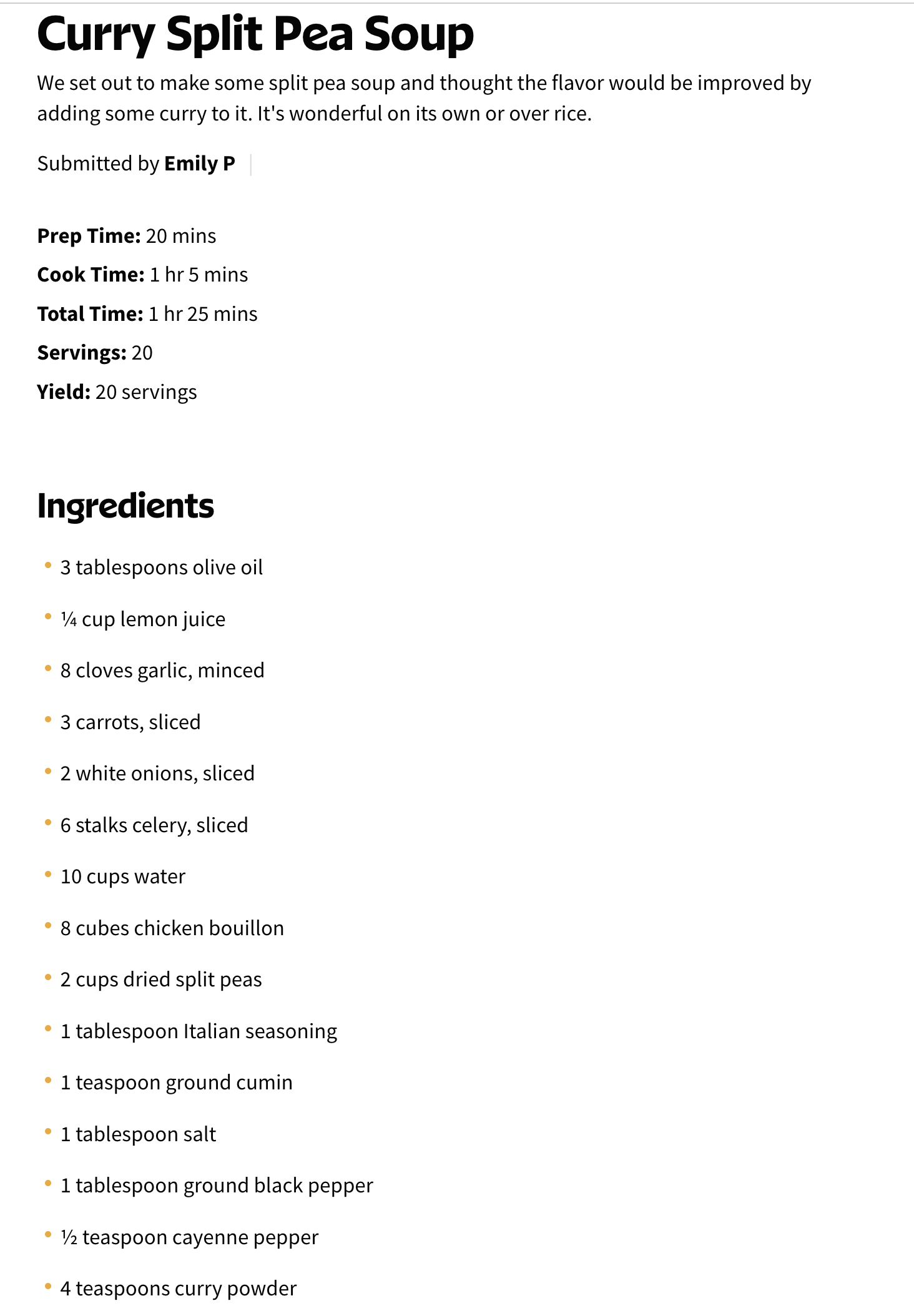
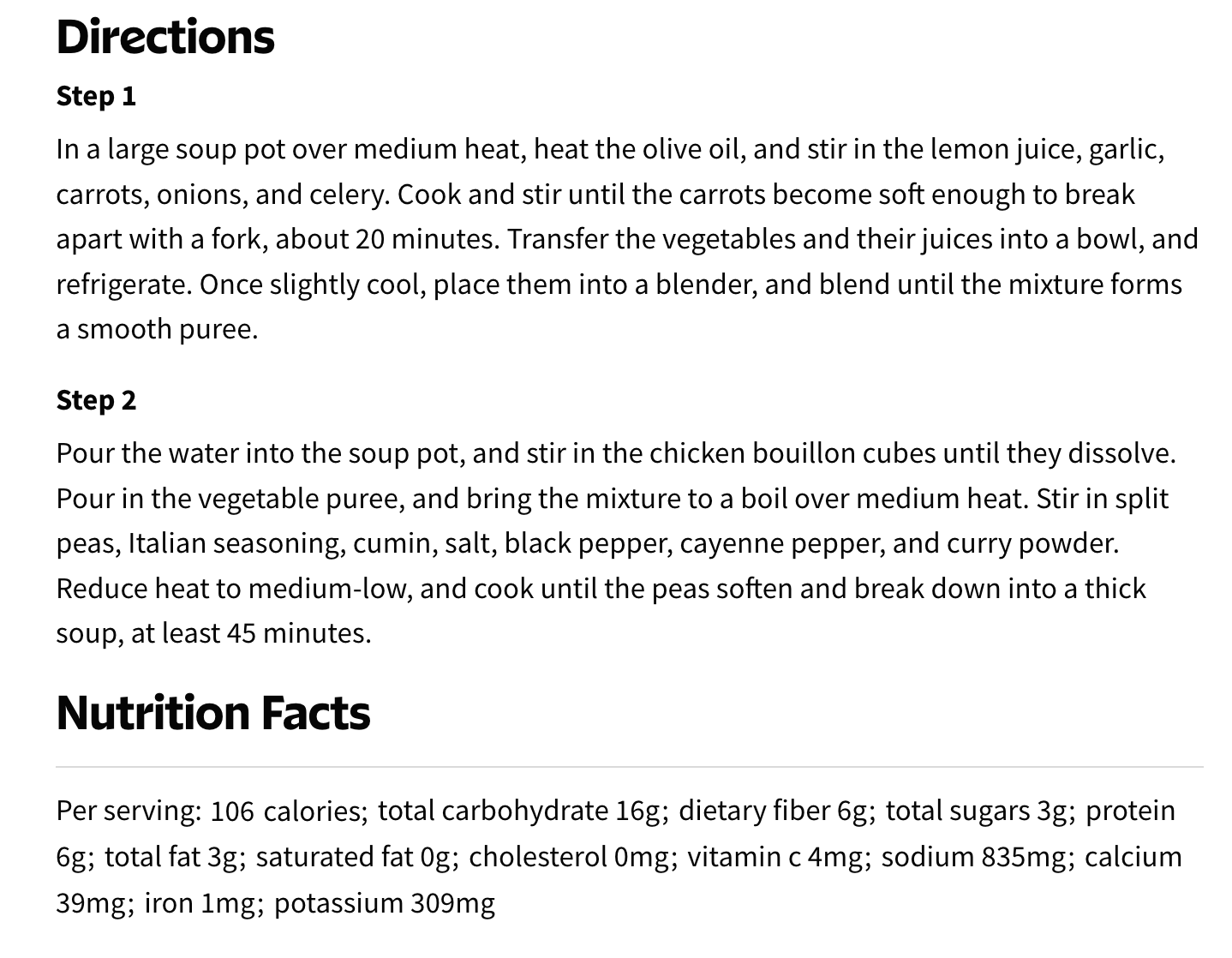
THE SOUP — CURRIED SPLIT PEA.
This is via Allrecipes.
Thank you for being here with me. All the content is free, obviously. It happens every two weeks or so. It’s sort of just a Substack about me trying to find comfort or coziness or something that I’m longing for. And hanging out with you.
I’m always thankful for help buying dog treats.
Write Better Now and Living Happy are likely much more helpful places if you’re into that. I usually post 1-2 Living Happy posts a week and 1-2 Write Better Now posts. I’d love it if you joined with me there, too, but obviously, no pressure.